Humanoid Robots 2026: Figure AI, Tesla Optimus & Boston Dynamics Atlas Explained
Humanoid Robots 2026 in 60 Seconds: Figure AI, Tesla Optimus & Boston Dynamics Atlas Explained
TL;DR — Quick Insights
- The ChatGPT moment has arrived: NVIDIA CEO Jensen Huang declared at CES 2026 that the “ChatGPT moment for Physical AI is here.” Humanoid robots are transitioning from lab curiosity to commercial deployment this year.
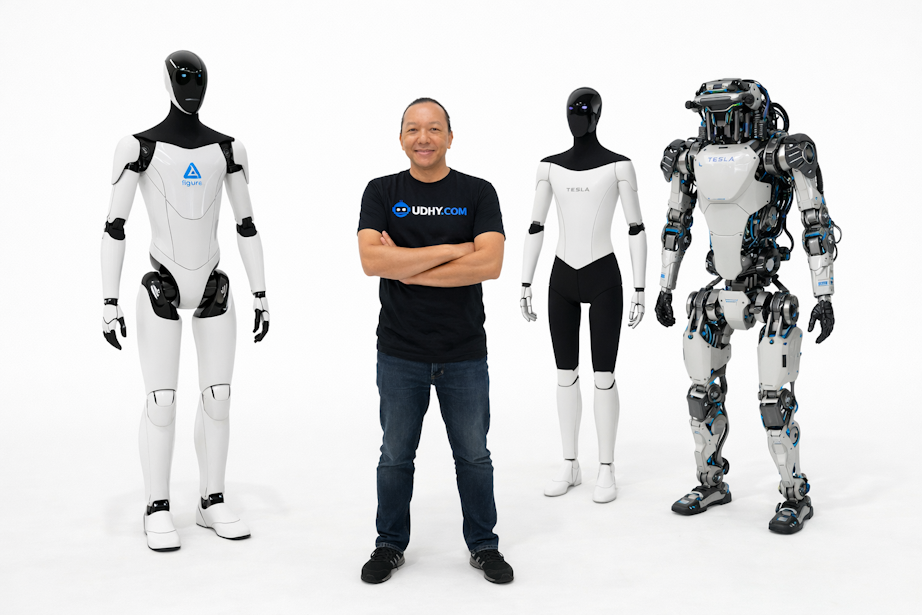
- Three dominant platforms: Figure 03 (BMW deployment, OpenAI-powered Helix AI), Tesla Optimus (internal Tesla factory deployment, $20K–$30K target price), and Boston Dynamics Atlas (56 DoF, Hyundai and Google DeepMind deployments).
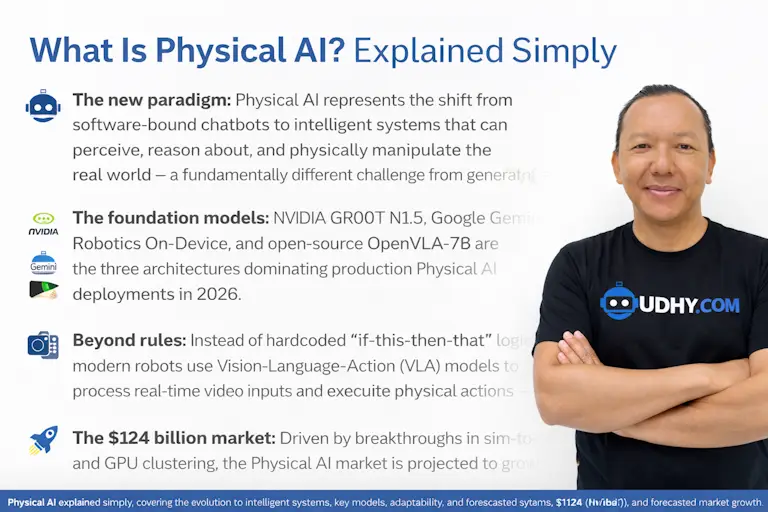
- VLA models are the brain: Vision-Language-Action (VLA) models process what the robot sees and hears, reason about it, and output physical actions — making humanoids genuinely adaptive for the first time.
- 50,000+ units in 2026: Counterpoint Research estimates over 50,000 humanoid robots will be operating commercially in 2026 — up from 16,000 at end of 2025.
- Still early, still limited: Battery life (90 min – 8 hours), dexterous manipulation failures, $20K–$150K price points, and structured-environment dependency keep humanoids out of most workplaces today.
Introduction: The Year Humanoid Robots Left the Lab
For decades, humanoid robots existed in one of two places: science fiction films or heavily funded research labs where they performed carefully rehearsed demonstrations for cameras. In 2026, that era is definitively over. Amazon is testing Agility Robotics’ Digit in live warehouse operations. BMW’s Spartanburg facility in South Carolina is running Figure 03 robots on the production line. Tesla Optimus units are working inside Tesla’s Fremont factory sorting battery cells. Hyundai’s Georgia plant has Boston Dynamics Atlas units in active trials.
The shift from demonstration to deployment happened for three reasons, all arriving simultaneously. First, Vision-Language-Action (VLA) models — the same class of AI that powers large language models — were adapted to give robots the ability to reason about the physical world and translate language commands directly into physical actions. Second, electric actuator technology matured to the point where humanoid robots can be both powerful enough and precise enough for industrial tasks. Third, manufacturing costs dropped dramatically: humanoid platforms that cost $500,000 in 2023 are targeting sub-$30,000 price points by 2028.
This guide briefly explains how humanoid robots work from the inside out — sensors, AI, locomotion, manipulation, and power — and gives you an honest assessment of where the three leading platforms stand in mid-2026.
1. The 5‑System Architecture Behind Every Humanoid Robot
Every humanoid robot, regardless of brand or price point, is built from the same five integrated systems. Understanding how these systems work together is the foundation for understanding the entire field.
System 1: Perception — How Robots See the World
Humanoid robots perceive their environment through a layered stack of sensors working simultaneously. The primary sensors in 2026 platforms include:
- Stereo RGB cameras — provide depth perception through disparity calculation, similar to human binocular vision. Figure 03 carries six stereo cameras with a 60% wider field of view than its predecessor model.
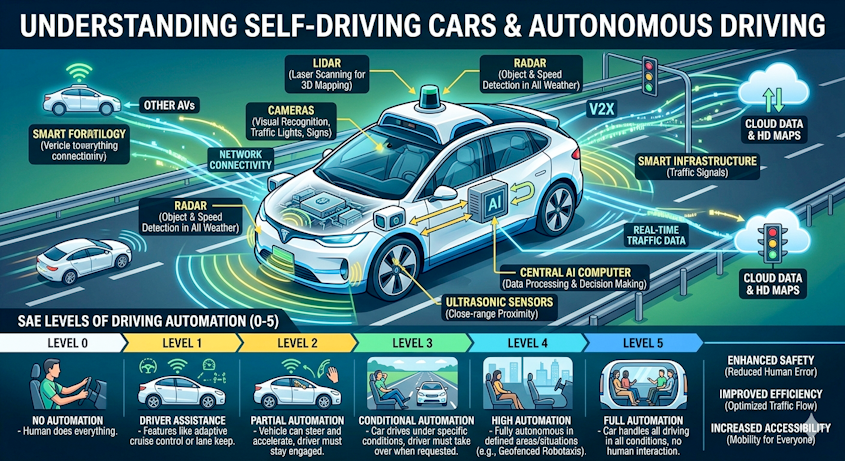
- LiDAR — emits laser pulses and measures time-of-flight to create precise 3D maps of the surrounding environment at 20–100Hz. Used for navigation and obstacle avoidance in structured environments.
- IMUs (Inertial Measurement Units) — measure acceleration and angular velocity at 200–1000Hz. Critical for balance control — the robot would fall within milliseconds without IMU feedback.
- Force/torque sensors — detect contact forces at the hands and feet. Figure 03 has fingertip tactile sensors detecting forces as small as 3 grams of pressure, enabling delicate manipulation tasks like picking up an egg.
System 2: AI Brain — VLA Models and the Decision Stack
The AI architecture of 2026 humanoid robots is the most transformative change from previous generations. Traditional robots followed pre-programmed scripts: if object is in position A, perform action B. This approach breaks down the moment anything deviates from the script — a misplaced part, an unexpected obstacle, a new task variant.
VLA (Vision-Language-Action) models solve this by training on vast datasets of human demonstration, then learning to generalise. The model takes the robot’s current camera views (vision), a natural language task description (language), and the robot’s proprioceptive state as input, then outputs a stream of joint position commands (action). Figure 03 runs Helix — an end-to-end VLA model co-developed with OpenAI — that enables the robot to understand natural language commands like “sort the red components into the left bin” and execute them without any task-specific programming.
Tesla’s approach differs: Optimus uses the same data pipeline and neural network architecture as Tesla’s Full Self-Driving system, applied to robot control. The key advantage is Tesla’s unique data flywheel — millions of hours of real-world driving footage that informs spatial reasoning for Optimus’s navigation.
System 3: Locomotion — The Walking Problem
Walking on two legs is one of the hardest problems in robotics. A biped is inherently unstable — unlike a quadruped or wheeled robot, a humanoid is always in a state of controlled falling, catching itself with each step. The control software must compute the optimal foot placement and center-of-mass trajectory dozens of times per second to maintain balance.
Boston Dynamics Atlas leads the field in dynamic locomotion, with 56 degrees of freedom enabling running, jumping, and dynamic parkour maneuvers. The electric Atlas launched in 2024 can carry 50 kg, perform 360-degree spin-jump sequences, and recover from unexpected pushes — capabilities developed over 15 years of hydraulic Atlas research.
Tesla Optimus and Figure 03 prioritise energy-efficient walking over dynamic movement. Optimus weighs 57 kg — 35% lighter than Atlas — and achieves longer operational duration at the cost of athletic performance. For warehouse and factory deployment, steady, energy-efficient bipedal walking is more valuable than backflips.
While software gets the headlines, a humanoid form factor is inherently unstable. Translating a high-level cognitive command into precise arm movements requires complex spatial mathematics, homogeneous transformation grids, and inverse kinematics frameworks.
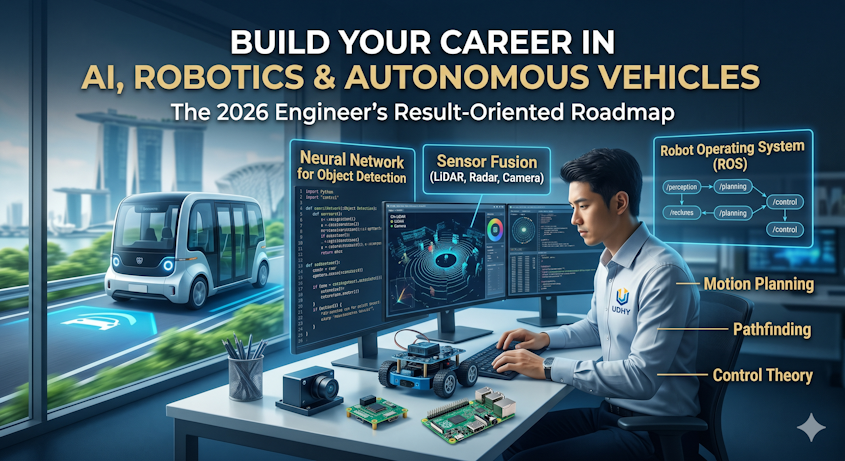
Engineering teams building these local movement parameters must possess a firm grasp of multi-sensor calibration and robot operating system middleware—foundations we teach comprehensively inside our Advanced Robotics Engineering & ROS 2 Course.
System 4: Manipulation — Hands That Can Do Work
Manipulation is currently the most challenging capability for humanoid robots. Opening a door, turning a valve, picking up an object of unknown weight from an arbitrary position — tasks trivially easy for humans — require extraordinary sensor integration, AI precision, and mechanical dexterity from a robot.
| Platform | Hand DoF | Payload (per hand) | Notable Capability | Limitation |
|---|---|---|---|---|
| Figure 03 | 16 DoF | ~5 kg | Egg manipulation; tool use via Helix AI | Dexterous fine manipulation degrades in novel contexts |
| Tesla Optimus Gen 2 | 22 DoF | ~2 kg | Delicate object handling; battery cell sorting | Limited public dexterity demonstration data |
| Boston Dynamics Atlas | Unknown | 50 kg (total) | Heavy lifting; dynamic object handoffs | Commercial manipulation data limited |
| Unitree G1 | 7 DoF (est.) | ~3 kg | Available for purchase; open SDK | Less advanced AI integration vs Tier 1 platforms |
System 5: Power — The Battery Problem
Battery technology remains the most significant operational constraint for humanoid robots in 2026:
- Figure 02: 20+ hours on 2.25 kWh battery — currently the best in class for industrial shift coverage.
- Tesla Optimus: Approximately one full 8-hour work shift on a 2.3 kWh battery — designed for factory use cases.
- Boston Dynamics Atlas: Approximately 90 minutes of intensive activity — optimised for dynamic demonstrations, not sustained deployment.
- Unitree G1: Approximately 2 hours in standard operation.
Battery swap systems — where a depleted battery pack is hot-swapped in under 90 seconds — are emerging as the practical solution for continuous operation. Figure AI has demonstrated battery swap protocols at its BotQ manufacturing facility. This mirrors the approach used in electric bus depots, including Moovita’s Singapore depot where battery swap infrastructure enabled 20+ hour continuous AV operation.
Interested to learn how robots work, read more @ Robotics for Experts — Advanced Deployment and Fleet Management and Multi-Agent Robot Systems and Fleet Coordination.
2. Figure AI vs Tesla Optimus vs Boston Dynamics Atlas: 2026 Humanoid Robot Comparison
In 2026, three leading humanoid robots showcase distinct hardware philosophies. Figure AI’s Figure 03 emphasizes general‑purpose adaptability, standing at 168 cm, 60 kg, with 44 degrees of freedom, tactile fingertip sensors, and a 300‑minute runtime powered by inductive wireless charging. Tesla’s Optimus Gen 2 focuses on manufacturing scalability, with a 173 cm frame, ~56 kg weight, 28 DOF, and a 2.3 kWh battery delivering several hours of operation; its design prioritizes cost‑efficient mass production. Meanwhile, Boston Dynamics Atlas remains a research‑oriented powerhouse, built for agility and dynamic mobility rather than commercial deployment, featuring hydraulic actuators, advanced balance control, and unmatched locomotion speed, though lacking the energy efficiency and runtime of its competitors.
Together, these platforms highlight the trade‑offs between industrial robustness (Figure AI), scalable production (Tesla Optimus), and mechanical agility (Atlas) — shaping the humanoid robotics landscape in 2026.
Table: Humanoid Robot Comparison (2026) : Figure AI vs Tesla Optimus vs Boston Dynamics Atlas
| Specification | Figure 03 | Tesla Optimus | Boston Dynamics Atlas |
|---|---|---|---|
| Height | 1.68 m | 1.73 m | 1.90 m |
| Weight | 60 kg | 57 kg | 89 kg |
| Degrees of Freedom | ~44 total | ~28 total | 56 total |
| Payload | ~20 kg | ~20 kg | 50 kg |
| Battery Life | 20+ hours | ~8 hours | ~90 min |
| AI System | Helix (OpenAI co-dev) | Tesla FSD neural stack | In-house + Google DeepMind |
| Deployment (2026) | BMW Spartanburg (confirmed) | Tesla Fremont (internal) | Hyundai Georgia + DeepMind |
| Price Target | Not announced | $20K–$30K (est. 2028) | ~$150K (not for sale publicly) |
| Available to Buy | No | No | No (fleet use only) |
This comparison reflects the platforms as of mid-2026. For the most current breakdown — including the Unitree G1, the only humanoid robot you can actually purchase today, plus a full engineering strengths/limitations analysis for each platform — see our expanded 2026 Humanoid Robots: Figure, Atlas, Optimus & Unitree — Full Comparison.
3. Real‑World Humanoid Robot Deployments in 2026: What’s Actually Working
Agility Robotics Digit — Amazon Warehouse (Confirmed)
Agility Robotics has the most verified commercial deployment in the field. Amazon has confirmed active Digit testing at its Shreveport, Louisiana facility, with the robot handling tote movement between conveyors. Agility’s ROAM leasing model — charging per operational hour rather than selling the hardware — has made trials financially accessible for large logistics operators.
Figure 03 — BMW Spartanburg (Confirmed)
Figure AI has confirmed that Figure 03 units are operating in BMW’s South Carolina manufacturing facility, handling parts presentation to human assembly workers. The Helix AI system enables the robot to respond to verbal task instructions from human workers on the production line — a significant operational milestone for human-robot collaboration in manufacturing.
Tesla Optimus — Fremont Factory (Internal, Confirmed)
Tesla has confirmed Optimus units are working inside the Fremont facility, primarily on battery cell sorting. Elon Musk has stated ambitions for 1,000 units internally by end of 2026, though Tesla’s track record on production timelines warrants appropriate skepticism. No third-party commercial availability has been confirmed for 2026.
4. The Physical AI Connection: How Vision‑Language‑Action (VLA) Models Transformed Robotics
Prior to VLA models, every robotic manipulation task required explicit programming: define the object, define the grasp, define the motion trajectory, handle each exception. This approach scaled poorly — each new task variant required engineering hours.
VLA models change this fundamentally. Trained on massive datasets of human demonstration combined with robot trajectory data, VLA models learn to generalise. The model infers: “the instruction says pick up the wrench, the camera shows the wrench is on the left workbench, my previous attempts show I need to approach at 30 degrees to clear the obstacle.” This reasoning — over vision, language, and prior experience simultaneously — is what makes modern humanoid robots genuinely useful rather than just impressive.
UDHY’s Physical AI & VLA Models course covers this architecture in depth, including hands-on implementation of policy learning pipelines using NVIDIA Isaac Lab and MuJoCo. Also, Rather than hardcoding task-specific motion paths, modern 2026 humanoid brains rely on unified neural networks. This specialized architecture maps raw sensory data (like RGB camera streams) directly to continuous physical motor joint trajectories.
If you are looking to understand the underlying deep learning backbones, transformer layers, and cross-attention mechanics that power these systems, we break down the deployment matrices step-by-step in our premier [Expert Robotics & Physical AI Masterclass]
💡 Where Do You Start? The surge in humanoid robot deployments across manufacturing and intralogistics has created an unprecedented demand for modern robotics talent. If you are entirely new to electronics, logic loops, and microprocessor coding, you can build your baseline projects without expensive hardware investments using our free, simulated Online Robotics Course for Beginners.
5. FAQs on Humanoid Robots
6. Lessons Learned
- VLA models are now mandatory knowledge: If you work in robotics or AI and haven’t studied VLA architectures, you are already behind the frontier. These models are the most significant shift in robotics capability since deep learning. UDHY’s Physical AI course covers them comprehensively – Deep Learning for Robotics & Autonomous Systems.
- Deployment context determines platform choice: Atlas is wrong for 20-hour warehouse shifts; Figure 02 is wrong for dynamic outdoor environments. Always match the robot platform to the operational requirement.
- The battery problem is the deployment bottleneck: Technical capability is no longer the primary limit on humanoid deployment. Battery energy density and swap infrastructure will determine which companies scale successfully in 2027–2029.
- Humanoid robots create new job categories: Demand is growing rapidly for robot fleet operators, humanoid robot trainers (teaching via demonstration), safety engineers (learn more on AV Safety: Sensors, AI & Cybersecurity), and VLA model fine-tuning specialists.
- Real deployments beat viral demos: Judge a humanoid platform by confirmed, verifiable commercial deployments — not by YouTube videos. As of mid-2026, Agility + Figure have the strongest verified deployment evidence.
For the latest specs, pricing, and a fourth platform (Unitree G1) not covered here, see our updated 2026 comparison.
7. UDHY Learning Path: From Beginner to Job‑Ready Robotics Engineer
Interested in becoming a robotics engineer and building humanoid robots? UDHY offers a structured learning path designed to help you transition from curious enthusiast to industry‑ready professional. Follow this progressive track to gain the skills, projects, and confidence needed to thrive in corporate robotics roles.
| 1. Foundation | Introduction to AI + ML Fundamentals | 3–5 hrs | Python + ML context |
| 2. Physical sandbox | Robotics for Beginners | 8–12 hrs | First physical project |
| 3. Core engineering | Robotics for Advanced | 25–35 hrs | ROS 2 + YOLO + kinematics |
| 4. Deep learning | Deep Learning for Robotics | 10–14 hrs | PyTorch + TensorRT deployment |
| 5. Navigation | Autonomous Navigation & SLAM | 12–16 hrs | Nav2 + SLAM + A* planning |
| 6. Frontier | Expert Robotics + Physical AI | 30–40 hrs | VLA models + production deployment |
8. References & Authoritative Sources
- Counterpoint Research. (Jan 2026). Humanoid Robot Market Forecast 2026–2030.
- Tesla Q1 2026 Earnings Call — April 22, 2026. Elon Musk statements on Optimus production timeline.
- Figure AI. (2026). Figure 03 Platform Overview and Helix AI System Documentation.
- Boston Dynamics. (2026). Atlas — Next Generation Electric Humanoid.
- Goldman Sachs Research. (2025). Humanoid Robot Market Report — $38 Billion by 2035.
- RobotLAB. (2026). Humanoid Robots for Business: 2026 Guide.
- International Federation of Robotics. (Feb 2026). AI in Robotics — New Position Paper.
- Manufacturing Dive. (Jan 2026). The Physical AI Craze and Other Automation Trends to Watch.
- IEEE Spectrum. Robotics and Automation.
- NVIDIA Developer Blog. Isaac Platform for Physical AI.
- UDHY Physical AI & VLA Models Course.
About the Author
Dr. Dilip Kumar Limbu Co-Founder, Moovita | Former Principal Scientist, A*STAR | PhD, Auckland University of Technology
Connect via LinkedIn Direct Inquiry.
Disclaimer
The views expressed here are personal and based on 25+ years in the industry, including my work at Moovita. They do not necessarily reflect the views of any organization.
Enjoying this post? Subscribe to get more AI insights.