Why AI Is Replacing Software Engineers in 2026 — And What You Must Do Now
In the next 60 seconds, you’ll see why AI replacing software engineers is no longer a prediction — it’s already happening.
TL;DR — Quick Insights:
– 864 tech workers are losing their jobs every single day in 2026
– 47.9% of Q1 2026 layoffs were directly linked to AI automation
– Traditional software engineering job postings dropped 15% in 2 months
– AI job postings have surged 340% since 2024
– The Physical AI market is projected to hit $38 trillion by 2030
– Engineers who upskill in AI and robotics now are the most in-demand on the planet
The solution is the AI Career Toolkit 2026 — your complete roadmap to pivot from software engineering into AI and Physical AI roles before it’s too late.
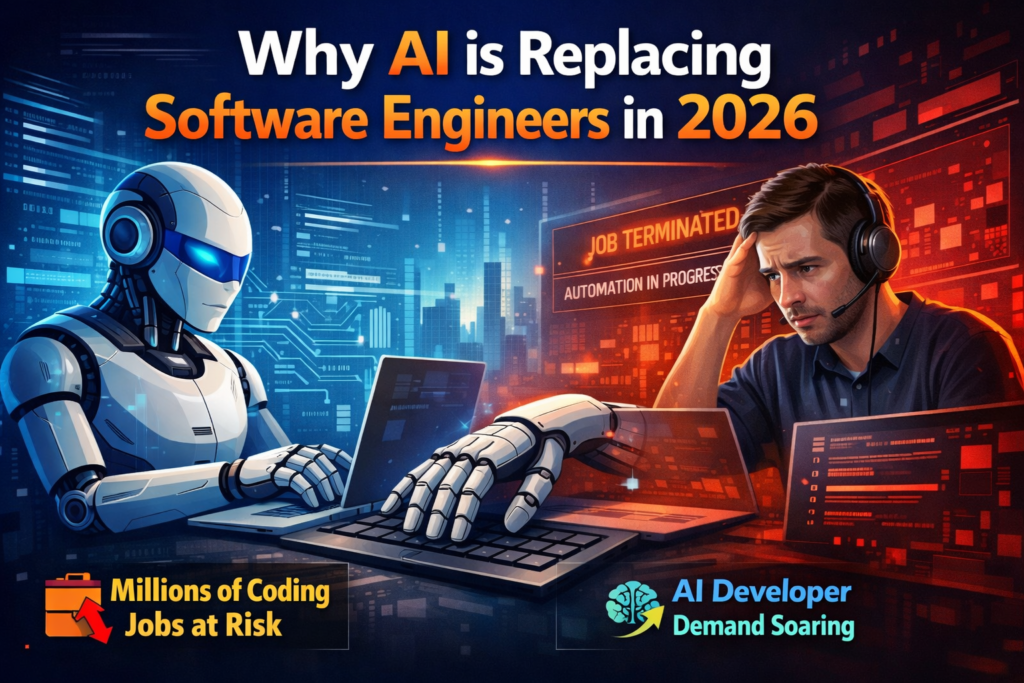
Let me be direct with you. If you are a software engineer and you have not changed anything about your skill set in the last 12 months, your job is at risk. Not someday. Right now.
In the first four months of 2026 alone, According to ByteIota’s 2026 Tech Layoffs report, 95,878 tech workers were laid off — that is 864 people losing their jobs every single day (Bytelota Technology). Nearly half of those cuts were directly linked to AI automation. Companies are not hiding it anymore. According to Yahoo finance, Block CEO Jack Dorsey stated publicly that his company cut from 10,000 to fewer than 6,000 employees — not because of financial difficulty, but because AI can now do the work (Yahoo Finance). Amazon cut 16,000 corporate roles (Yahoo Finance). Meta cut 8,000 positions while announcing $135 billion in AI infrastructure investment (CNBC / The Verge analysis). According to Forbes, Oracle quietly eliminated over 10,000 jobs (Forbes).
Table : Company‑by‑Company Layoffs Breakdown (2026). Scroll right to see full details on mobile.
| Company | Industry | Jobs Cut | Reason | Replacement |
|---|---|---|---|---|
| Amazon | Cloud & Retail | 16,000 (Jan 2026) | Streamlining ops, AI competition | AI‑driven logistics & cloud automation |
| Meta | Social/VR | 8,000 (~10% of Reality Labs) | Shift from metaverse to AI R&D | AI research & generative systems |
| Oracle | Cloud Software | Up to 30,000 | Cash crunch, AI data center spending | AI cloud infra & automation |
| Snap | Social Media | 16% workforce (~1,500) | CEO cited AI efficiency | AI‑powered content & ad tools |
| Block (Square) | Fintech | 4,000 | AI replacing payments/customer support | AI transaction automation |
| Atlassian | Enterprise Software | Thousands (exact not disclosed) | “Changed mix of skills” | AI‑augmented collaboration tools |
The message from every major tech company is the same: AI is cheaper, faster, and does not call in sick. And the engineers who built these tools are often the first ones to feel the consequences.
The Global Job Market Is Shifting — Faster Than You Think
Watch: FREE AI Career Guide.
This is not a trend. It is a structural transformation of the global workforce, and the numbers prove it.
LinkedIn data from early 2026 shows that traditional software engineering job postings declined 15% in just the first two months of the year compared to the same period in 2025. At the same time, AI-related job postings have increased 340% since 2024. The gap between the roles disappearing and the roles being created is widening every quarter.
The World Economic Forum‘s Future of Jobs Report 2025 projects that 92 million jobs will be displaced globally by 2030. At the same time, 170 million new jobs will be created — but they require completely different skills. The engineers who adapt will thrive. The engineers who wait will be left behind.
Here is what makes the current wave different from previous downturns. In 2023, companies laid off engineers because of post-pandemic over hiring. That was a correction. What is happening in 2025 and 2026 is something else entirely — it is a fundamental restructuring of what engineering teams look like. Junior developer roles are contracting sharply because AI coding tools now handle the entry-level work. AI coding assistants like GitHub Copilot and Cursor have made a team of 10 developers capable of producing the output of 15. The math is simple and brutal: you need fewer people.
Why Software Engineering Jobs Are at Risk
Software engineering is being hit hard for a specific reason: it was always the most automatable of the engineering disciplines. Writing code that follows patterns, reviewing pull requests, debugging standard errors, writing unit tests — these are exactly the kinds of structured, repetitive tasks that AI tools are best at.
Microsoft CEO Satya Nadella revealed that 30% of Microsoft’s code is now written by AI. Microsoft then laid off thousands of engineers — over 40% of those cuts targeted software roles. The people who wrote the AI tools are now being replaced by those same tools.
The roles disappearing fastest:
- Junior developers — AI handles the entry-level coding work
- QA automation testers — AI writes and runs tests faster
- Middle-layer project managers — AI tracks and reports progress
- Back-office and data entry roles — fully automated
- HR and recruitment roles — IBM replaced entire HR departments with AI
Anthropic CEO Dario Amodei has stated plainly that AI could eliminate half of all entry-level white-collar jobs within five years. Ford CEO Jim Farley echoed the same warning. An MIT simulation found AI can replace nearly 12% of the entire US workforce — equivalent to $1.2 trillion in lost salaries. Wall Street banks alone are planning to eliminate approximately 200,000 jobs over the next three to five years.
This is not anti-AI sentiment. This is what the data shows. And the data is getting harder to ignore. The question is no longer whether this will happen. It is whether you will be ready when it does.
AI Job Growth: Opportunities Engineers Must Seize
Before we talk about what to learn, let us be honest about what is no longer enough on its own.
Skills that AI has significantly devalued:
- Basic Python scripting and data wrangling
- Standard CRUD application development
- Manual testing and QA workflows
- Template-based web development
- Data entry, reporting, and basic analysis
That does not mean these skills are worthless. It means they are no longer sufficient to make you irreplaceable. Engineers who only have these skills are competing directly with AI tools — and they are losing.
The roles that AI cannot replace — and that companies are desperately hiring for:
- AI Systems Engineers who embed intelligence into physical machines
- Robotics AI Specialists combining ROS 2, sensor fusion, and machine learning
- Autonomous Systems engineers designing self-driving and humanoid robot behaviour
- AI Engineers who can deploy and maintain production-grade intelligent systems
- Physical AI developers who understand how AI interacts with the real, physical world
Gartner projects that 80% of the engineering workforce will need to upskill by 2027. The WEF confirms that AI and big data are now the fastest-growing skill categories globally. AI Engineer roles specifically are seeing demand rise by over 140%. The talent gap is enormous — LinkedIn’s 2025 Workforce Report found that AI job postings outnumber qualified candidates by 3.5 to 1. Entry-level AI engineers in the US are commanding $95,000 to $130,000 — and companies are willing to hire non-traditional candidates if they can demonstrate the right skills.
The $38 Trillion Physical AI Market by 2030
Most engineers are focused on the software AI wave — LLMs, chatbots, generative tools. That wave is real and important. But the next, bigger wave is Physical AI.
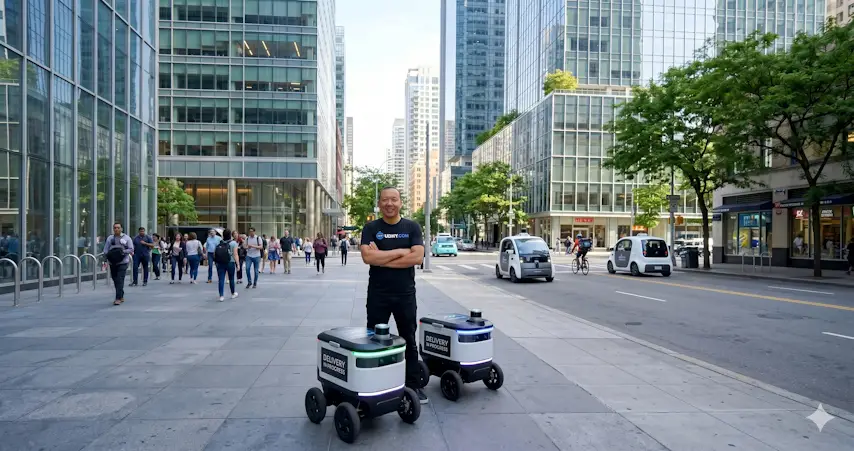
Physical AI is artificial intelligence embedded in hardware that interacts with the real world. It is not AI that reads your emails. It is AI that drives your car, operates in your hospital, manages your warehouse, and works alongside you on the factory floor. Tesla Optimus, Boston Dynamics Atlas, Figure AI’s humanoid robots — these are Physical AI. And they represent a market projected to reach $38 trillion by 2030.
Physical AI works in three steps:
- SENSE — cameras, lidar, IMU sensors read the environment in real time
- DECIDE — AI processes the data and makes a decision in milliseconds
- ACT — the machine moves, grips, drives, or responds physically
The engineers who understand how to build, train, and deploy Physical AI systems right now are the engineers who will be most in demand — and most highly paid — for the rest of this decade. The WEF reports that robotics and automation advancements are already primary drivers of demand for technology skills in 58% of global businesses.
If you know software engineering, you already have the foundation. The gap between where you are and where the market needs you is smaller than you think — if you start filling it now.
How Engineers Can Stay Relevant in the AI Era
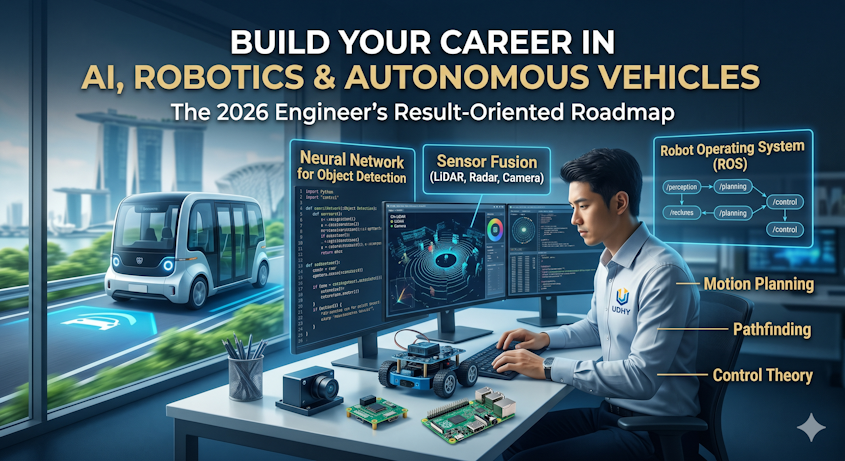
After 25+ years building autonomous systems and robotics, here is my honest assessment of the most valuable skills a software engineer can add in 2026.
I. ROS 2 — Robot Operating System
ROS 2 is the industry standard for robotics development. If you want to work on autonomous vehicles, warehouse robots, surgical systems, or humanoid robots, you need ROS 2. It is open source and free to learn. Companies building physical AI systems expect engineers to know it.
II. Sensor Fusion
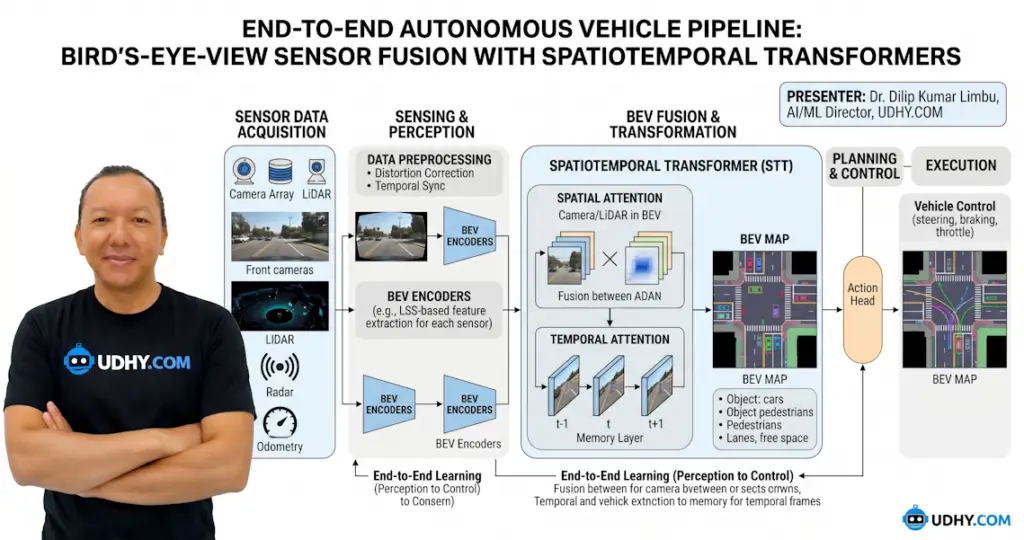
Understanding how to combine data from cameras, lidar, radar, and IMU sensors is the skill most software engineers skip — and the one that autonomous systems companies pay most for. Sensor fusion is how physical AI machines understand their environment.
III. Machine Learning for Real-Time Systems
Not just training models in Jupyter notebooks — but deploying ML models that run in real time on embedded hardware. Edge AI, NVIDIA Jetson, real-time inference. This is where software meets physical systems.
IV. Autonomous Systems Design
Understanding how to architect systems that can make decisions without human intervention — path planning, behaviour trees, control systems. This is the engineering layer that sits between raw AI and physical machines.
V. AI-Augmented Development
Engineers who use AI tools to multiply their output are not being replaced — they are becoming more valuable. Learning to architect systems, review AI-generated code, and focus on higher-order problems is the survival skill for every software engineer right now.
Get the AI Career Toolkit 2026: Your Survival Guide
I have spent the last three years taking everything I know from 25+ years in AI and robotics research and distilling it into practical, actionable learning for engineers who need to make this transition now.
The AI Career Toolkit 2026 is a complete resource kit designed specifically for software engineers who want to pivot into AI and Physical AI roles — without going back to university, without spending years re-learning from scratch.
What is inside the AI Career Toolkit 2026:
- A step-by-step Physical AI and Robotics learning roadmap from beginner to job-ready
- The exact skills hiring managers at robotics and autonomous systems companies are looking for right now
- A curated list of free and paid resources for ROS 2, sensor fusion, and autonomous systems
- Resume and LinkedIn optimisation guide for AI and robotics roles
- Interview preparation for AI engineer and robotics developer positions
- A portfolio project guide — what to build to demonstrate Physical AI skills to employers
The Bottom Line
The question most engineers are quietly asking right now is: am I safe? The honest answer is: it depends entirely on what you do next.
AI will not replace every engineer. But it will absolutely replace engineers who do not understand AI. The professionals who upskill now — who move from writing basic applications to building systems that make machines intelligent, autonomous, and physical — are not at risk. They are the ones companies are desperately trying to hire.
You already have the foundation. You know how to code, how to build systems, how to debug under pressure. What you need now is the bridge — the AI and Physical AI skills that take your existing expertise and make it relevant to the next decade of engineering.
That bridge is waiting for you at udhy.com. The engineers who start building it today will still have jobs in 2030. The ones who wait may not get that chance.
About the Author
Dr. Dilip Kumar Limbu Co-Founder, Moovita | Former Principal Scientist, A*STAR | PhD, Auckland University of Technology
Connect via LinkedIn Direct Inquiry.
Disclaimer
The views expressed here are personal and based on 25+ years in the industry, including my work at Moovita. They do not necessarily reflect the views of any organization. [Back to Top ↑]
Enjoying this post? Subscribe to get more AI insights.